

Healthcare
HIPAA Compliant Two-Way SMS: Everything You Need to KnowMaster HIPAA-compliant two-way SMS: technical requirements, clinical use cases, BAA rules, and what separates compliant platforms from risky ones.

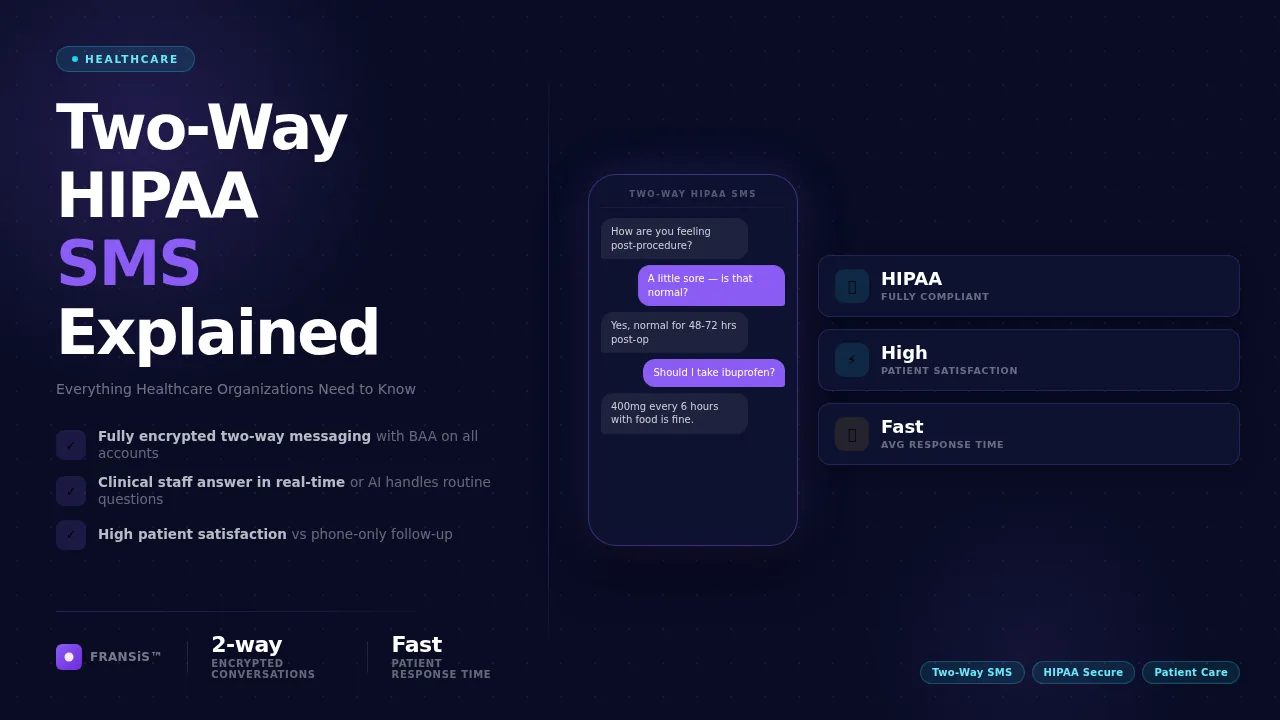

Master HIPAA-compliant two-way SMS: technical requirements, clinical use cases, BAA rules, and what separates compliant platforms from risky ones.
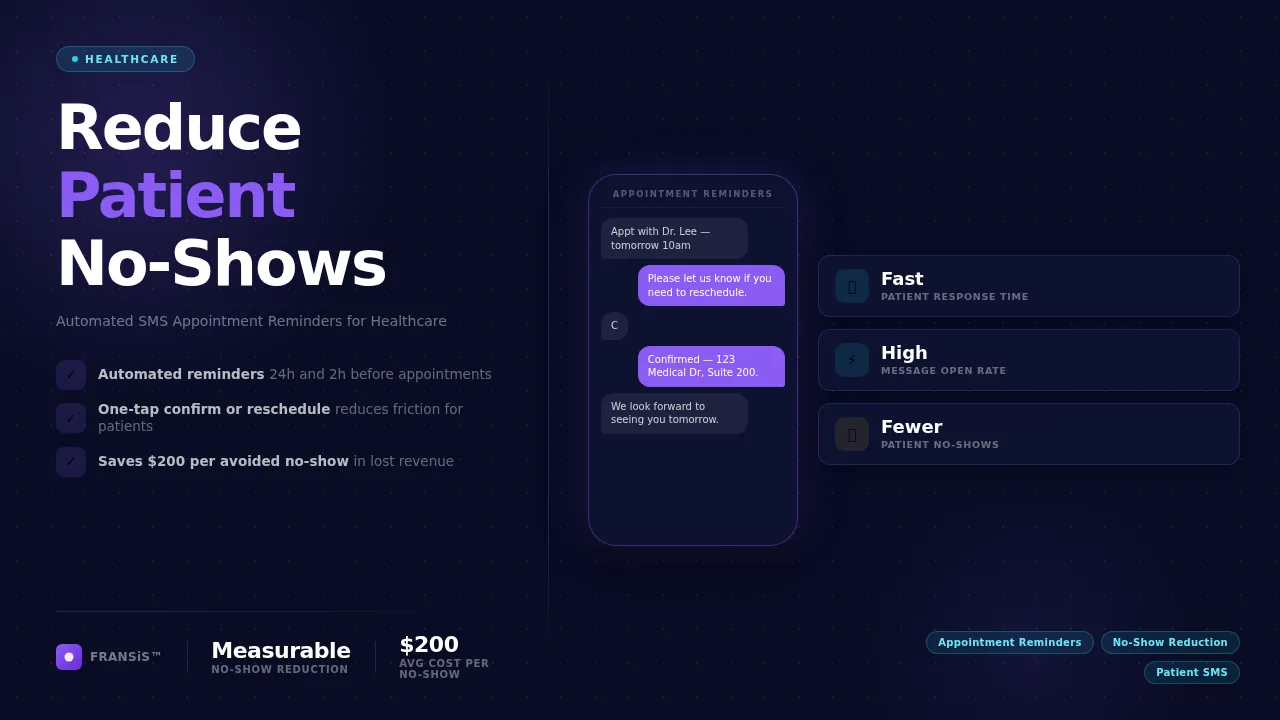
Reduce patient no-shows with automated SMS reminders. Optimal reminder sequences, copy-paste templates, and clinic workflows that actually work.
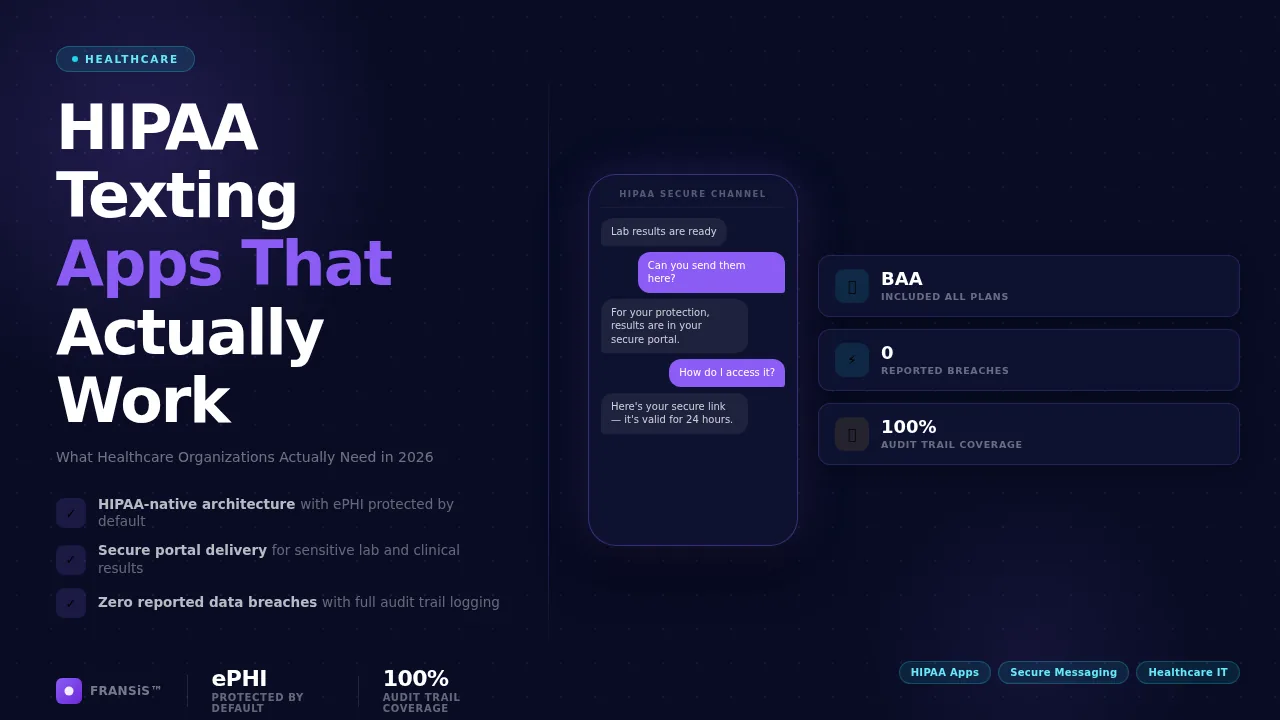
See the best HIPAA compliant texting apps and messaging software for 2026, judged on BAA availability, encryption, access controls, audit logs, and consent.
![HIPAA Compliant SMS Platforms: Complete Comparison [2026] — FRANSiS blog cover illustration](https://cdn.prod.website-files.com/671a2f64a9268760aebd15d5/6a87b0566c179ae30fc485c1_6a87b055d4f9157c1bdeb5ab_hipaa-compliant-sms-platforms-comparison.webp)
Is SMS HIPAA compliant on its own? Compare HIPAA compliant SMS services, platforms, and texting vendors on BAA coverage, encryption, audit logs, and pricing.
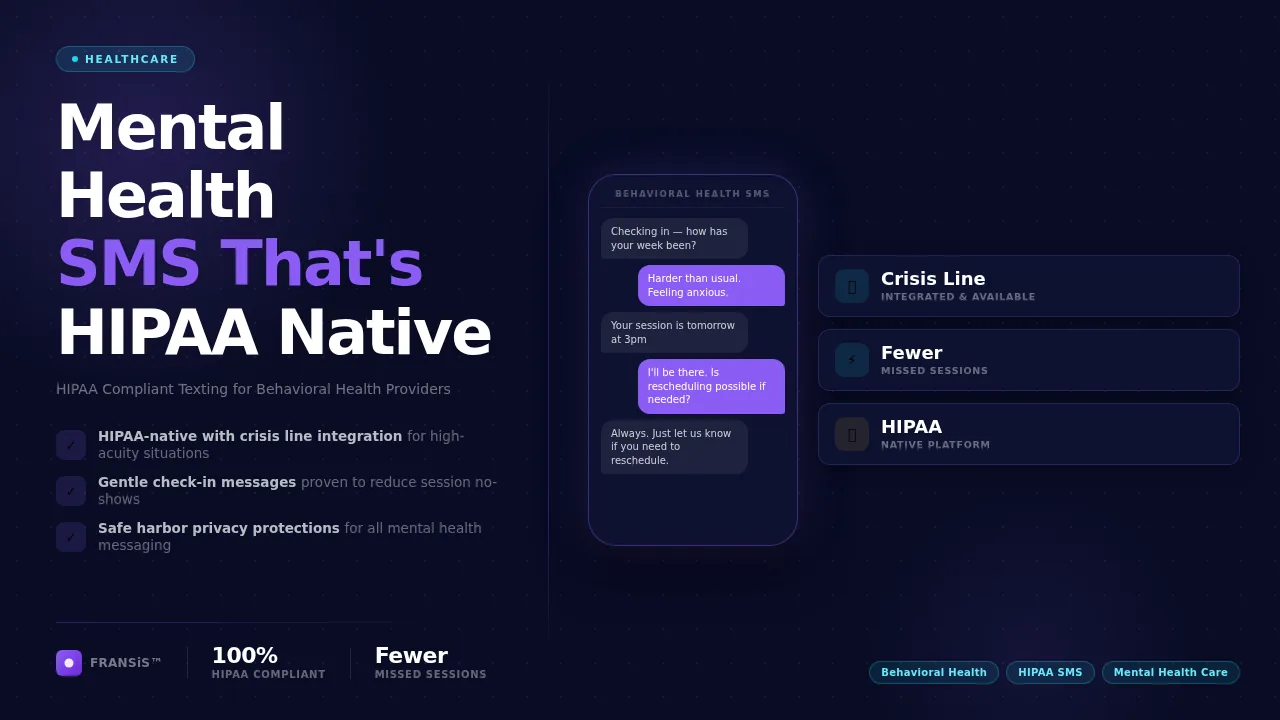
HIPAA-compliant SMS for behavioral health providers: how texting improves appointment adherence, therapy continuity, and crisis outreach.
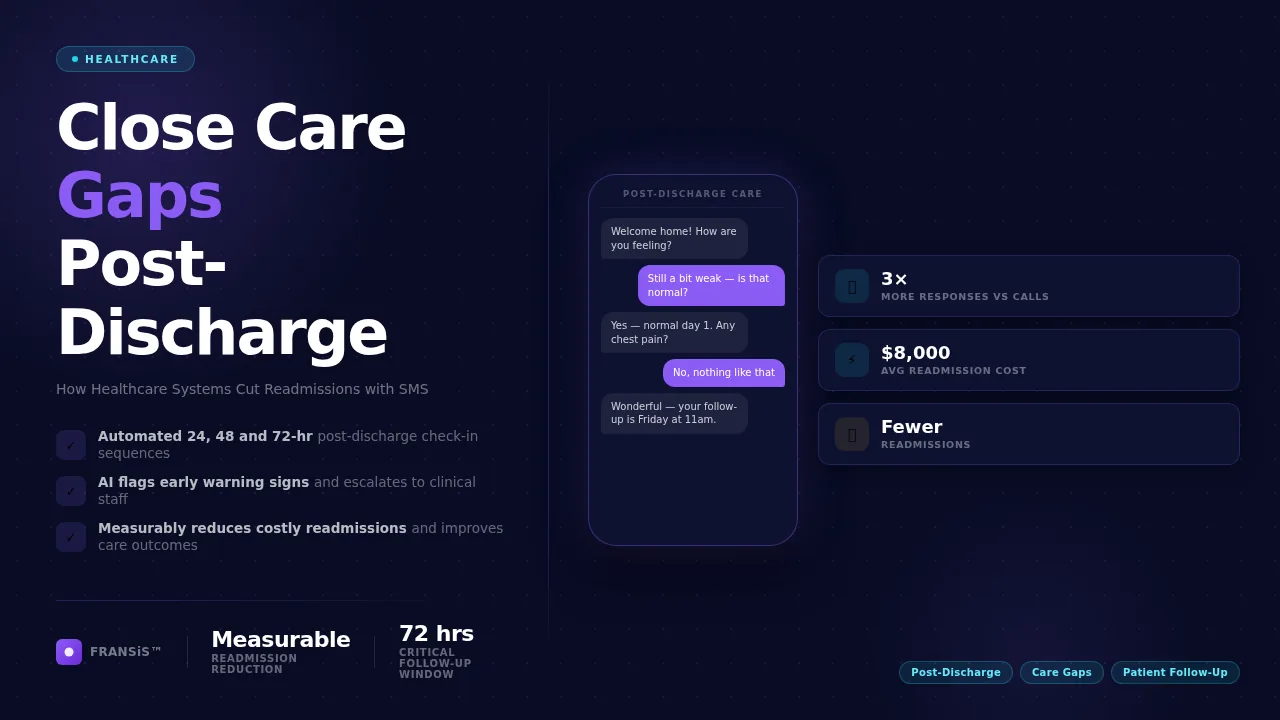
Post-discharge SMS protocols that close care gaps: 30-day follow-up sequences, AI risk detection, and patient messaging with a signed BAA included.
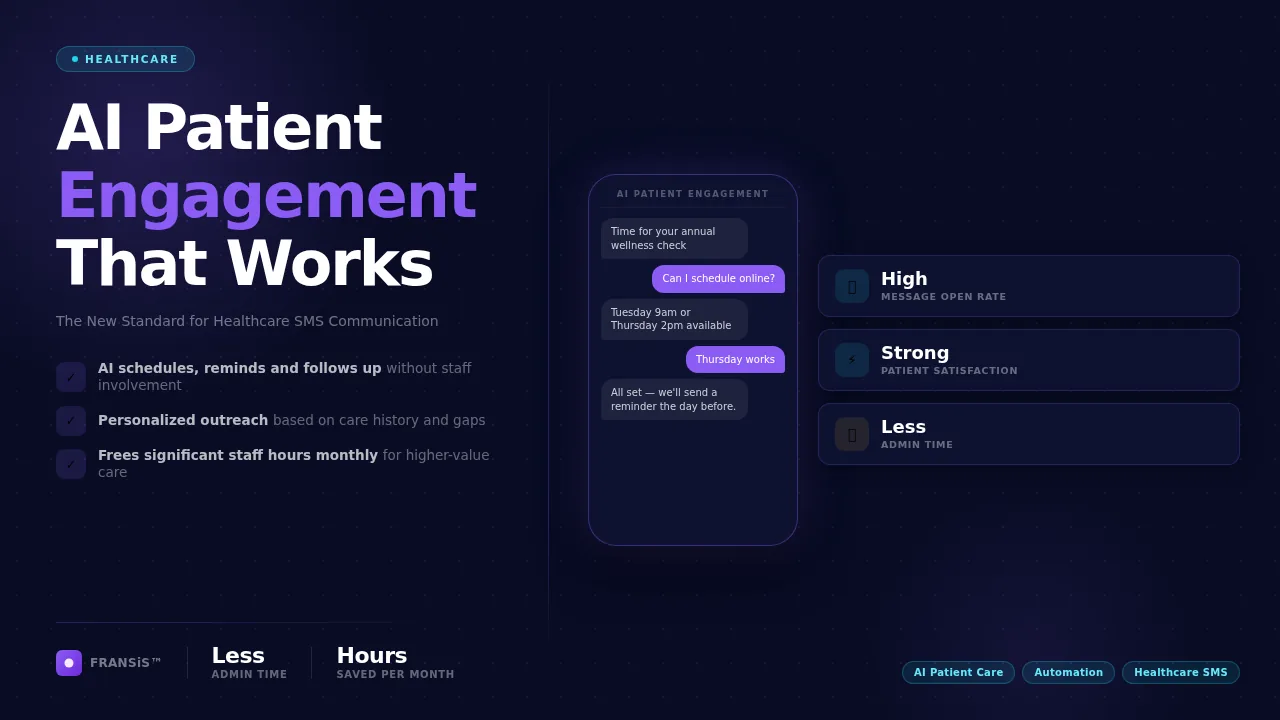
How AI turns SMS from batch reminders into patient engagement: personalized outreach, two-way conversations, HIPAA compliance supported with a signed BAA.
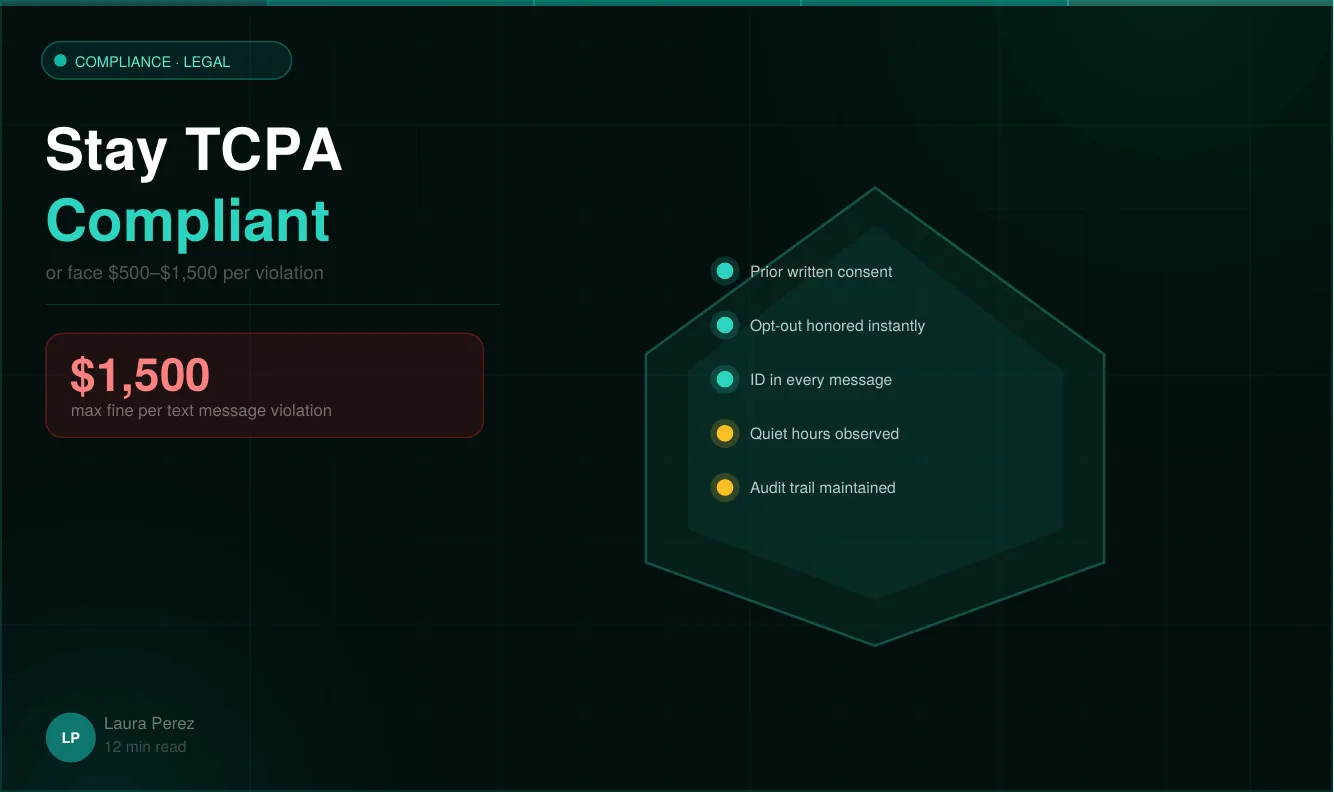
TCPA compliance for text messaging in plain English: consent rules, quiet hours, opt-out wording, and a checklist your team can run through today.
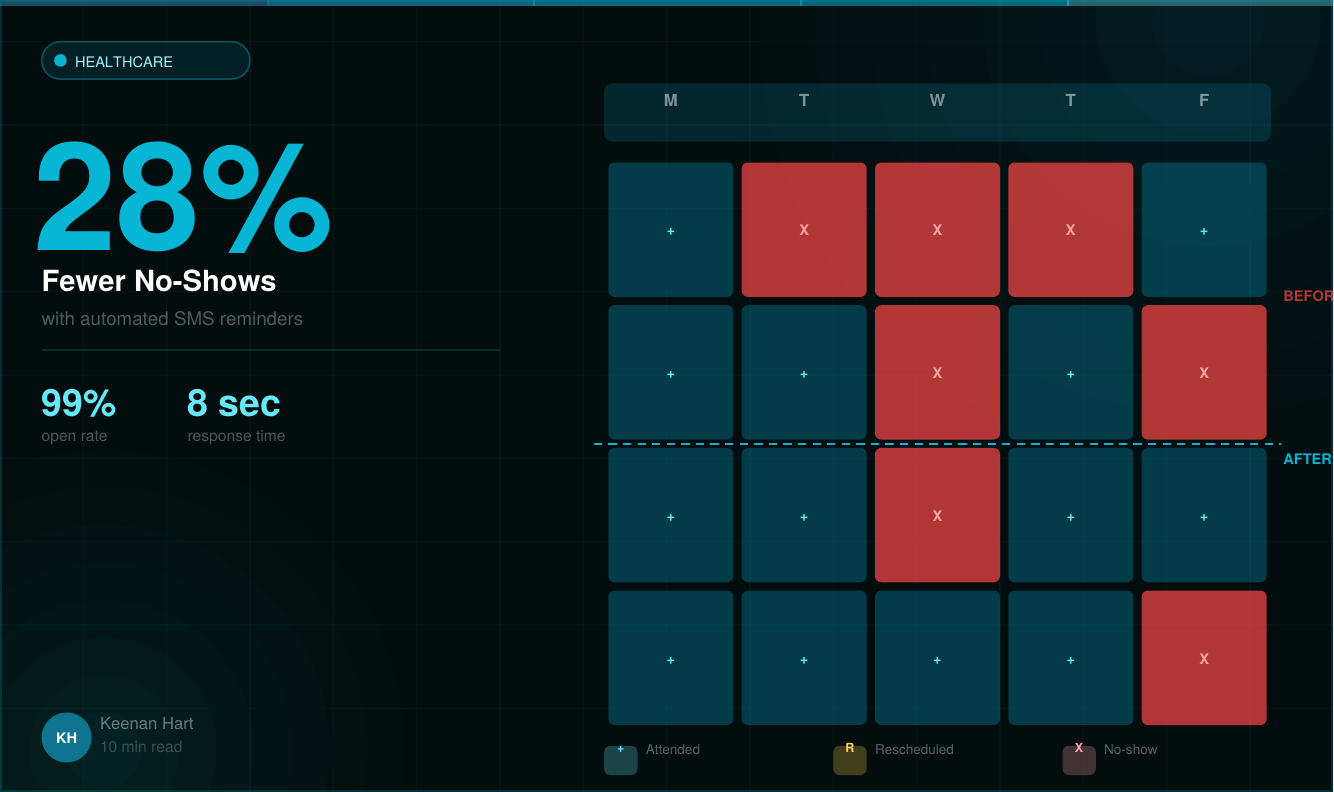
Patient portals get ignored. Apps go undownloaded. SMS reminders consistently reduce no-shows — see how regional health systems deploy them.

HIPAA-native AI platform trusted by mission-based organizations nationwide.


